Pages

Sunday, November 23, 2025

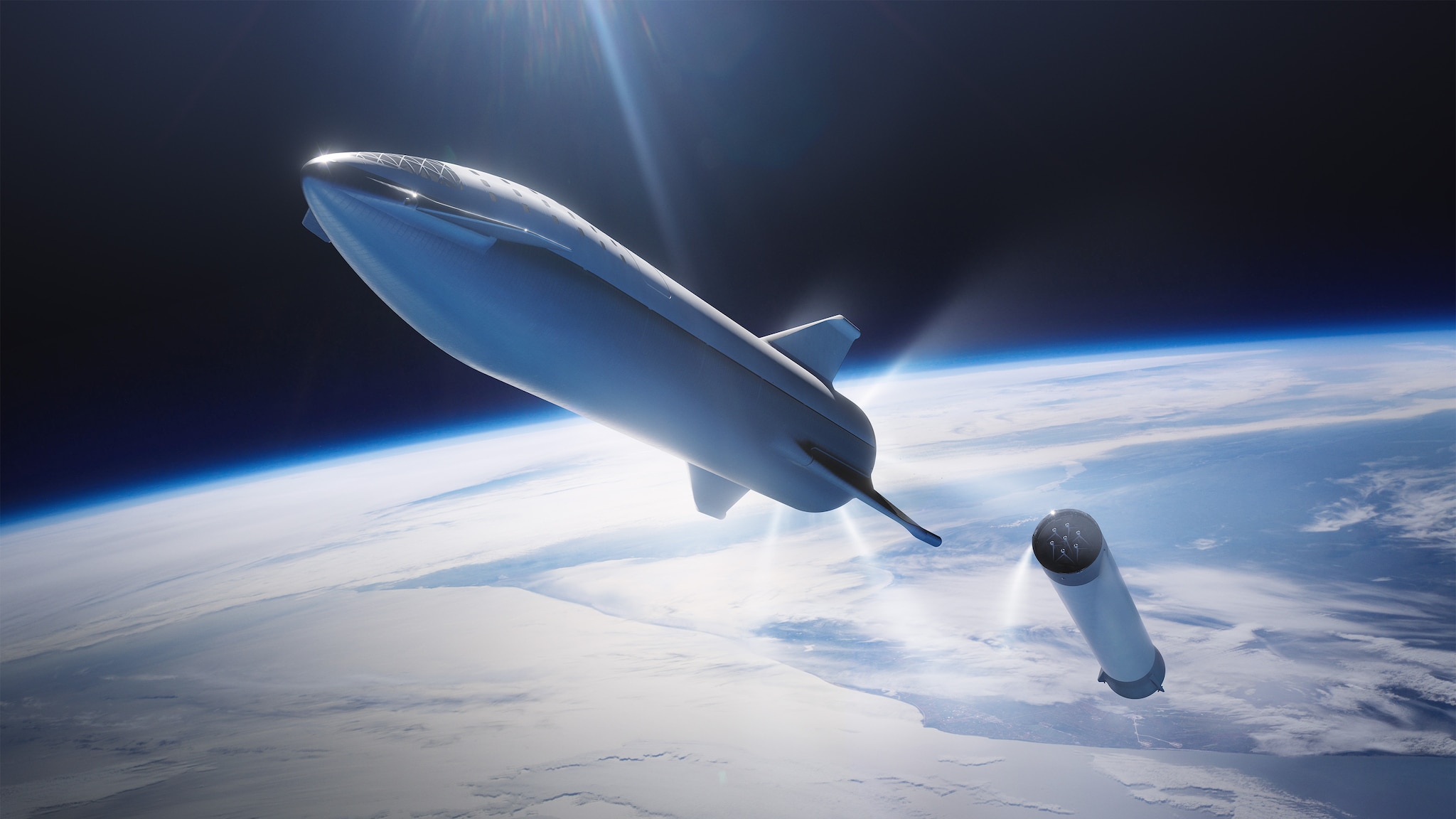
Final Flight of Starship V2

Image Source creadit: spacelaunchschedule.com


On October 13, 2025, SpaceX successfully launched Starship Flight 11, marking the last test of the Version 2 Starship design.

This flight wrapped up a critical phase of development before the company moves on to the more powerful and more advanced Starship V3.


Why Flight 11 Was Important

Flight 11 wasn’t just “another test.” It was a milestone that proved many of the technologies needed for future missions:

1. In-Space Engine Relight

This was one of the biggest achievements of Flight 11.


2. Payload Deployment Test

  • Starship deployed mock Starlink satellites using the new “Pez dispenser” mechanism.

  • This confirmed it can reliably deliver large payloads into orbit — a key part of SpaceX’s financial model.


3. Improved Booster Recovery Test


4. Stability & Heat Shield Improvements

Starship V2’s heat tiles performed much better than early flights, with fewer losses and better re-entry stability.


Why It Was the Final V2 Flight

Flight 11 concluded the entire Starship V2 testing program.

SpaceX is now shifting to:

🚀 Starship V3

All future Starship missions will use V3 hardware.


🌕 What Comes Next After Flight 11?

Friday, March 21, 2025

Starship (Standard Orbital Starship)


Overview

Starship is SpaceX’s fully reusable next-generation spacecraft, designed for deep-space missions, crewed spaceflight, and cargo transport. It is part of a two-stage system with the Super Heavy booster (first stage) and the Starship vehicle (second stage).

Key Features of Starship

Height: 50m (165ft) (without booster), 121m (397ft) (with Super Heavy)
Engines: 6 Raptor engines (3 sea-level, 3 vacuum-optimized)
Payload Capacity: ~100-150 tons to Low Earth Orbit
Fully Reusable: Designed for rapid turnaround flights
Stainless Steel Body: Withstands extreme temperatures and is cost-effective

Starship’s Role

Starship is a multi-purpose vehicle, designed to replace Falcon 9, Falcon Heavy, and Dragon for:

Flight Profile

  1. Super Heavy Booster Launches Starship → Returns to Earth for landing.
  2. Starship Continues to Orbit → Can go to the Moon, Mars, or beyond.
  3. Re-Entry & Landing → Uses “belly flop” maneuver to slow down before landing vertically.

Challenges & Future

Reusability: Starship needs to land reliably on Earth & other planets.
Raptor Engine Development: Refining efficiency & reliability.
Orbital Refueling: Needed for long-distance missions.

Friday, February 21, 2025

Human Landing System (HLS) Starship


HLS Starship is a lunar lander variant of SpaceX’s Starship spacecraft, developed for NASA’s Artemis program. It is designed to land astronauts on the Moon as part of the Artemis III mission, which aims to return humans to the lunar surface for the first time since 1972.

Key Differences from Standard Starship

Unlike the standard Starship, which is built for Earth-to-orbit operations, HLS Starship is designed exclusively for lunar landings and will never return to Earth. Here’s how it differs:

No Heat Shield: Since HLS won’t re-enter Earth’s atmosphere, it does not need a heat shield.
No Front Flaps or Rear Fins: Without the need for atmospheric re-entry or aerodynamic control, it lacks the standard Starship’s control surfaces.
Extended Fuel Tanks: To handle long lunar missions, it has increased fuel capacity.
Crew Accommodations: It features a spacious cabin for astronauts, airlocks, and EVA (extravehicular activity) support.
Landing Thrusters: Instead of using its main Raptor engines near the Moon’s surface (which could kick up dangerous lunar dust), it has dedicated landing thrusters placed higher on the vehicle.

How HLS Will Work

HLS cannot fly to the Moon alone; it requires in-orbit refueling from multiple Starship Tankers. The process involves:

  1. Tanker Starships launch to low Earth orbit (LEO) and fill an HLS fuel depot.
  2. HLS Starship launches separately, docks with the depot, and refuels.
  3. HLS travels to lunar orbit and waits for the Orion spacecraft (which carries astronauts from Earth).
  4. Astronauts transfer to HLS and descend to the Moon’s surface.
  5. After the mission, HLS returns to lunar orbit to transfer the crew back to Orion for their return to Earth.

NASA Contracts and Artemis Missions

  • SpaceX won the $2.89 billion contract for Artemis III in 2021.
  • NASA later awarded a second contract for Artemis IV, worth $1.15 billion, which will include upgrades based on Artemis III’s success.
  • NASA is also funding alternative landers from Blue Origin and other competitors for later missions.

Challenges and Progress

  • Refueling technology: SpaceX must demonstrate reliable in-orbit refueling, something never done before at this scale.
  • First lunar test landing: SpaceX may conduct an uncrewed lunar landing in 2025 or 2026 before Artemis III.

Sunday, February 2, 2025

A Look At Starship's Agenda for 2025

SpaceX's Starship program continues to be one of the most closely watched and ambitious projects in space exploration, and 2025 promises to be a busy year. Here’s an overview of what’s on the horizon for Starship this year:

1. Follow-Up Test Flights

After the recent test flight (Flight 7) in January 2025, which provided valuable data despite the loss of Ship 33, SpaceX is already planning subsequent test flights. The company is focused on learning from the recent anomaly—investigating issues like the propellant leak that led to Ship 33's explosion—to refine the design and improve overall safety.

2. Enhanced Reusability

One of SpaceX’s key goals with Starship is to achieve rapid reusability. In 2025, expect continued efforts to perfect booster recovery techniques and the refurbishment process between flights. With each test, SpaceX gathers insights that help shorten turnaround times, an essential factor for making routine deep-space missions a reality.

3. Mars and Beyond

While immediate goals involve proving the vehicle’s reliability in Earth’s orbit, SpaceX is also keeping its eyes on the long-term vision of Mars colonization. The data from 2025’s tests will feed directly into plans for longer-duration flights and the integration of new technologies meant to handle the rigors of interplanetary travel.

4. Software and Avionics Upgrades

Parallel to hardware improvements, SpaceX is continuously refining Starship’s software and guidance systems. Upgrades in these areas will not only improve flight performance but also ensure greater safety margins during critical maneuvers such as engine shutdowns, staging, and landing operations.

5. Integration with Future Missions

As SpaceX progresses with Starship, the program is expected to align with upcoming NASA initiatives, including aspects of the Artemis program and other commercial ventures. While details are still emerging, 2025 may feature collaborative missions where Starship plays a role in cargo deliveries or even crewed missions in the near future.

Looking Ahead

SpaceX remains famously ambitious. Elon Musk has often remarked that each test flight—whether entirely successful or not—is a crucial step toward making routine space travel a reality. As the year unfolds, we can expect press releases and live updates from the Starbase facility that reveal more about the specifics of each flight, further hardware iterations, and refined operational strategies.

Keep an eye on SpaceX's official channels and trusted space news outlets for the most up-to-date information as the Starship program evolves throughout 2025. Starship’s journey is a testament to rapid iteration in aerospace, where every setback is a stepping stone to achieving groundbreaking progress.

Starlink Satellite Deployment

SpaceX launched 22 more Starlink satellites from Vandenberg Space Force Base in California. Photo courtesy SpaceX

On February 2, 2025, SpaceX successfully launched 22 Starlink satellites from Vandenberg Space Force Base in California. The Falcon 9 rocket lifted off at 3:02 p.m. PST from pad 4E. Approximately eight minutes post-launch, the rocket's first stage executed a precise landing on the drone ship "Of Course I Still Love You" stationed in the Pacific Ocean.

This mission is part of SpaceX's ongoing efforts to expand the Starlink constellation, aiming to provide global high-speed internet coverage. The successful deployment and recovery underscore SpaceX's advancements in reusable rocket technology and its commitment to enhancing global connectivity.

Friday, January 31, 2025

Starship Flight 7: One Step Forward One Step Backward

 Starship Flight 7: One Step Forward One Step Backward

Debris from the exploded starship caught on camera while falling back towards earth (Image credit: Sky News)

On January 16, 2025, Space X launched its mega rocket comprising of the Starship Rocket and the Super heavy Booster (collectively referred to as Starship). The 403.5-foot-tall space vehicle liffted of from Space X's Starbase site in South Texas at 5:37 PM GMT. 

One of the major goals of this test flight was to catch the Superheavy booster with the launch tower's "chopstick" arms. This goal was attained as the second stage, after separation, fell back towards earth and glided gracefully into the tower's arms for the second time (the first being Starship's Test Flight 5).
SpaceX's seventh Starship megarocket launches on a test flight on Jan. 16, 2025. (Image credit: SpaceX)
But it was not all smooth riding, for another major goal was to test Space X's new Block 2 Ship. Ship 33 was supposed to fly much of the way around the world, then splash down softly in the Indian Ocean off the west coast of Australia about 66 minutes after liftoff, as it did on the three previous Starship launches.

Some eight minutes into the flight, Space X lost contact with the Starship upper stage, known as "Ship". Subsequently, Ship 33 was observed exploding over the Turks and Caicos Islands. This incident led to debris dispersal, causing several commercial flights to be diverted or delayed. 

Preliminary analyses suggest that Ship 33 exploded due to a propellant leak. Elon Musk indicated that the leak occurred in the cavity above the ship's engine firewall, leading to a pressure buildup that exceeded the venting capacity. This overpressure likely resulted in the explosion during the ascent phase. Meanwhile, the Federal Aviation Administration (FAA) has mandated a comprehensive investigation into the incident.

Final Flight of Starship V2

Image Source creadit: spacelaunchschedule.com   On October 13, 2025 , SpaceX successfully launched Starship Flight 11 , marking the last te...