
Overview
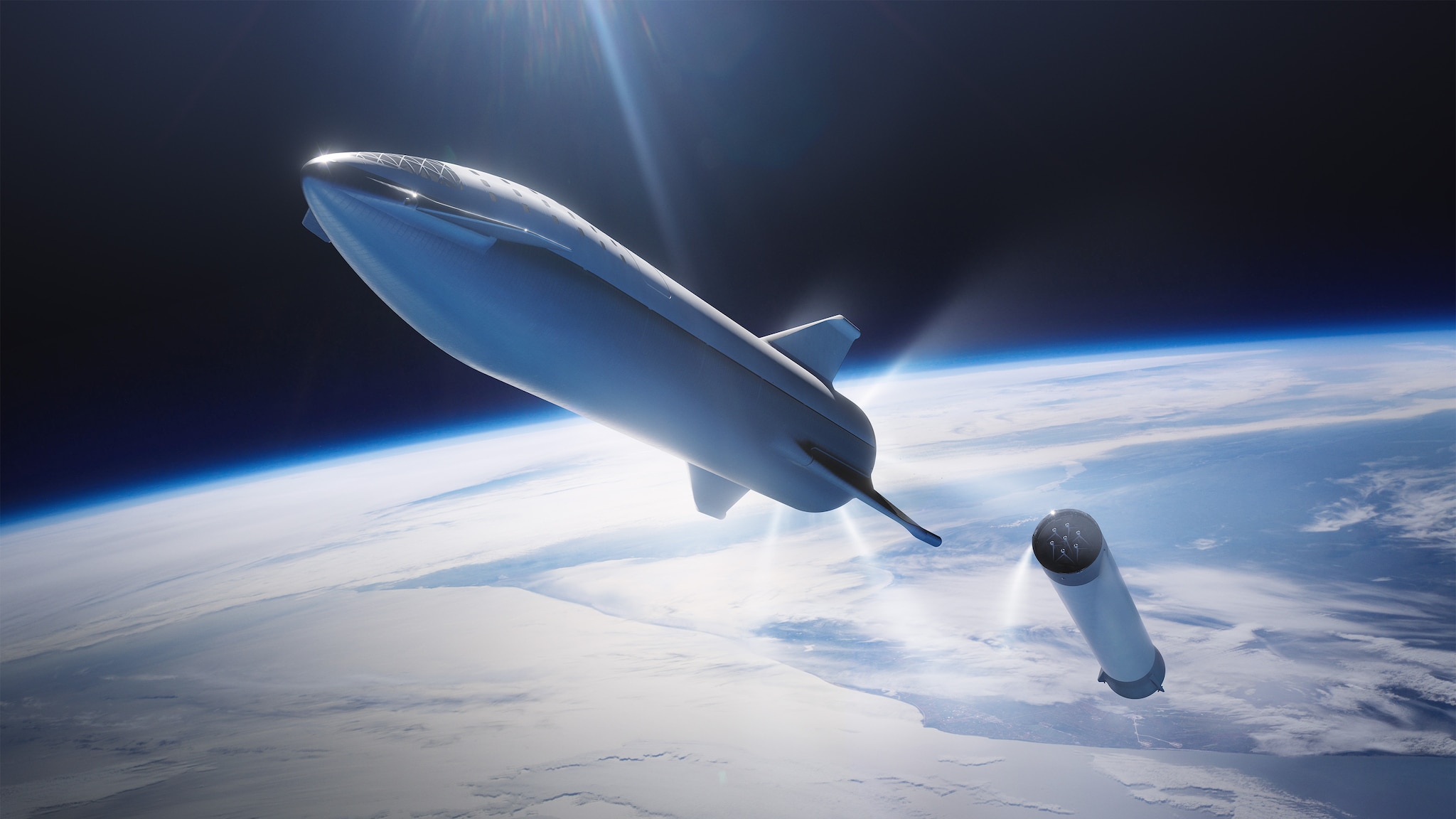
Starship is SpaceX’s fully reusable next-generation spacecraft, designed for deep-space missions, crewed spaceflight, and cargo transport. It is part of a two-stage system with the Super Heavy booster (first stage) and the Starship vehicle (second stage).
Key Features of Starship
Height: 50m (165ft) (without booster), 121m (397ft) (with Super Heavy)
Engines: 6 Raptor engines (3 sea-level, 3 vacuum-optimized)
Payload Capacity: ~100-150 tons to Low Earth Orbit
Fully Reusable: Designed for rapid turnaround flights
Stainless Steel Body: Withstands extreme temperatures and is cost-effective
Starship’s Role
Starship is a multi-purpose vehicle, designed to replace Falcon 9, Falcon Heavy, and Dragon for:
- Satellite Launches (cheaper, larger payloads)
- Point-to-Point Earth Transport (hypothetical long-distance travel)
- Space Stations & Colonies (lunar/Martian bases)
- Mars Colonization (Elon Musk’s ultimate vision)
Flight Profile
- Super Heavy Booster Launches Starship → Returns to Earth for landing.
- Starship Continues to Orbit → Can go to the Moon, Mars, or beyond.
- Re-Entry & Landing → Uses “belly flop” maneuver to slow down before landing vertically.
Challenges & Future
Reusability: Starship needs to land reliably on Earth & other planets.
Raptor Engine Development: Refining efficiency & reliability.
Orbital Refueling: Needed for long-distance missions.


